

-
Products

-
-
-
After-sale Service
What is the main function of the rotary blower speed?
Release time:
2022-03-21
The moment the exhaust port is connected to the exhaust port nearby, there will be a high-pressure gas backflow, which will increase the pressure in the working volume and ultimately transport the gas to the exhaust channel. Each concave curved surface part and the inner wall of the cylinder on the rotary blower will form the working volume, and during the rotor's reversal process, gas will be drawn from the intake port. The gas in the pump chamber will not undergo compression or expansion. When the top of the rotor reaches the edge of the exhaust port, the space will connect with the exhaust side, changing the fully enclosed state. When the gas pressure on the exhaust side is higher, some gas will backflow into the space between the rotor and the pump casing, thus increasing the gas pressure. As the rotor continues to roll, the gas will be discharged. The rotary blower operates by continuously rotating the rotor, drawing gas from the intake port into the space between the rotor and the pump casing, and then discharging it through the exhaust port. After inhalation, the space between the rotor and the pump casing is in a fully enclosed state. The oil seals of rotary blowers are mostly made of fluororubber material, as this material has the advantages of high temperature resistance, wear resistance, and long service life. Since it belongs to a constant torque load, the power saving rate is proportional to the reduction in speed, which has the advantages of high efficiency and high power saving rate. Moreover, as long as the furnace wall is intact, it can operate continuously for 24 hours, and the startup time is also very long.
The moment the exhaust port is connected to the exhaust port nearby, there will be a high-pressure gas backflow, which will increase the pressure in the working volume and finally transport the gas to the exhaust channel. Each concave curved surface part and the inner wall of the cylinder on the rotary blower will form the working volume, and during the rotor reversal process, gas will be drawn from the intake port. The gas in the pump chamber will not undergo compression and expansion. When the top of the rotor reaches the edge of the exhaust port, the space will connect with the exhaust side, changing the fully enclosed state. When the gas pressure on the exhaust side is higher, some gas will backflow into the space between the rotor and the pump casing, thus increasing the gas pressure. As the rotor continues to roll, the gas will be discharged.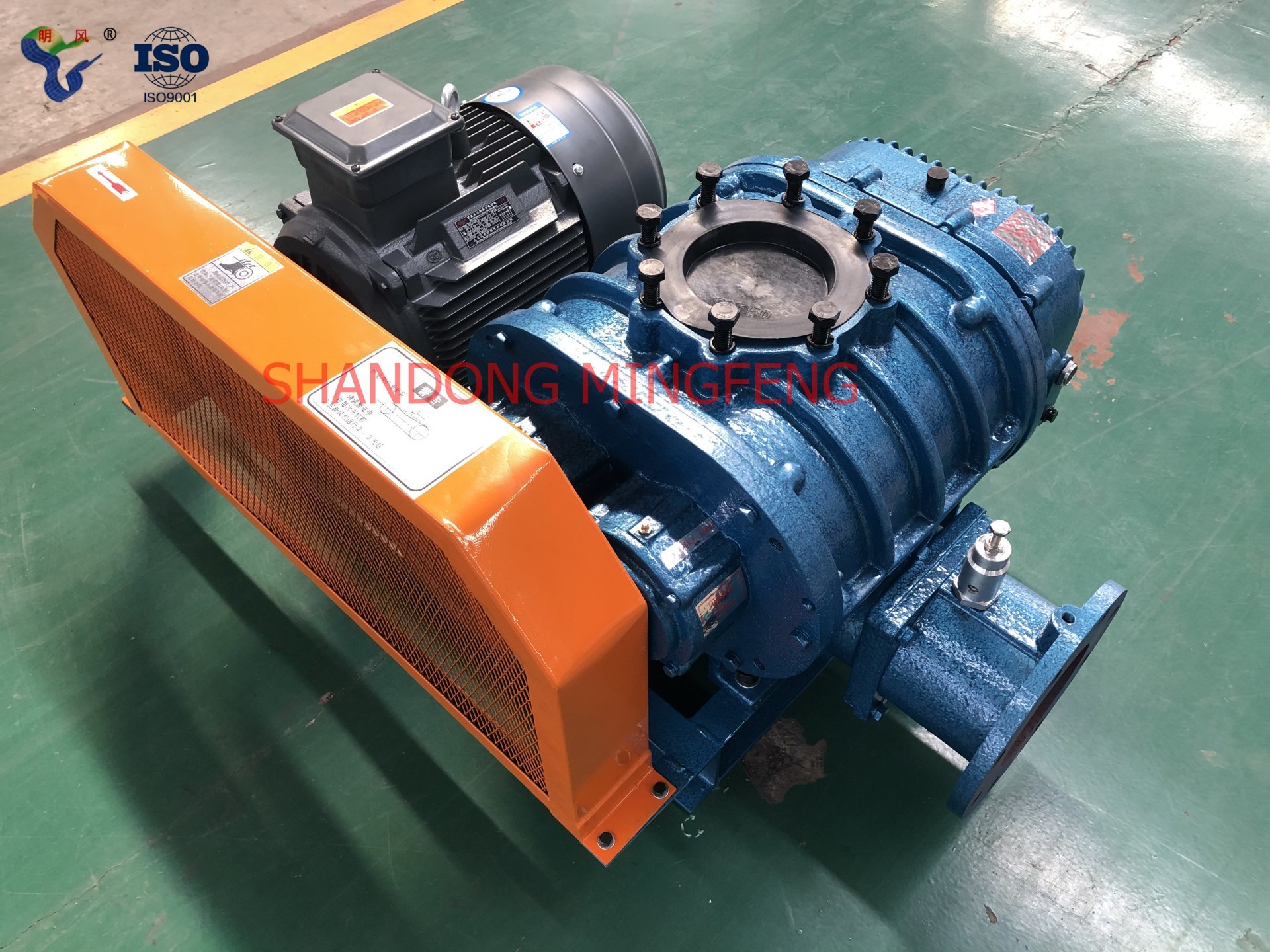 The rotary blower operates by the continuous rotation of the rotor, which draws gas from the intake port into the space between the rotor and the pump casing, and then discharges it through the exhaust port. After inhalation, the space between the rotor and the pump casing is in a fully enclosed state. The oil seals of the rotary blower are mostly made of fluororubber material, as this material has the advantages of high temperature resistance, wear resistance, and long service life. Because it belongs to a constant torque load, the power saving rate is proportional to the speed reduction, which has the advantages of high efficiency and high power saving rate. Moreover, as long as the furnace wall is not damaged, it can operate continuously for 24 hours, and the startup time is also very long.
Key words:

Submit information now to obtain the total solution of wind turbine
To provide users with high-quality products and convenient pre-sale, sale and after-sales service, reflecting the "Ming Feng" to make users satisfied with the whole process of service.
No. 1-3, West First Road North, Fenghuangshan Industrial Park, Puji Street, Zhangqiu District, Jinan City, Shandong Province
Free service hotline