

-
Products

-
-
-
After-sale Service
Mingfeng Machinery shares the reasons for the tripping of the Roots blower frequency converter.
Release time:
2022-06-16
1. Thunderstorms and heavy rain, or the startup of large equipment, can cause fluctuations in the power grid voltage, which may lead to the frequency converter's undervoltage protection tripping. 2. Due to long periods of neglect in maintenance and cleaning, excessive dust accumulation on the internal boards of the frequency converter or on the heat sink reduces the machine's cooling efficiency, causing the frequency converter to trip due to protective measures. 3. Excessive dust and debris accumulation inside the Roots blower, if not cleaned in time, reduces the gaps between rotors and between the rotor and the chamber, thereby increasing load resistance, which causes the motor and frequency converter to overload and trip protection. 4. When selecting a frequency converter, the chosen model capacity is too small. Generally, the capacity of the frequency converter should be about 20% larger than the rated power of the motor to ensure that the frequency converter can still drive the motor when it reaches full load. 5. Power supply voltage that is too high or too low can cause the frequency converter to overheat and trip protection. A power supply voltage exceeding 410 volts will increase the internal heat generation of the frequency converter, leading to a trip. A power supply voltage below 360 volts will increase the working current of the frequency converter, resulting in an overcurrent protection trip. 6. Issues with the frequency converter itself, such as damage to one of the rectifier templates on the back of the frequency converter, can cause the other two to operate in an overcurrent state, leading to a trip. If the Roots blower does not start under no load, it will trip or stall; it is essential to remember that the Roots blower must start under no load. A simple trip of the Roots blower will not damage it; in this case, one should open the vent valve, start the blower, and check its operating condition. If the motor burns out and cannot start the Roots blower, we will need to replace the motor, which is a significant loss. The Roots blower cannot be pressurized; pressurization can easily lead to motor damage, and a sudden increase in pressure on the blower can lead to severe situations. Unstable voltage is also one of the reasons for the protective power-off trip of the aeration Roots blower frequency converter. If the voltage is too low, below 360 volts, it will cause the aeration Roots blower to trip due to overcurrent protection; conversely, if it exceeds 410 volts, it will cause overheating inside the frequency converter and trip protection. When large equipment around the application scenario of the Roots blower causes significant voltage fluctuations, it can also lead to the blower's power-off protection trip. If there is a fault in one of the rectifier templates of the aeration Roots blower frequency converter, it will cause an overcurrent protection trip. Do not allow excessive dust accumulation inside the aeration Roots blower frequency converter or heat sink, as this will hinder cooling and cause the Roots blower to trip. If long-term rust and dust cause the gaps inside the Roots blower rotor, chamber, etc., to decrease, resistance will increase, leading to overload and power-off protection. 1. Startup precautions: If the Roots blower does not start under no load, it will trip or stall; it is essential to remember that the Roots blower must start under no load. 2. Simple trip: A simple trip of the Roots blower will not damage it; in this case, one should open the vent valve, start the blower, and check its operating condition. 3. Motor burn-out: If the motor burns out and cannot start the three-lobe Roots blower, we will need to replace the motor, which is a significant loss. The Roots blower cannot be pressurized; pressurization can easily lead to motor damage, and a sudden increase in pressure on the blower can lead to severe situations.
1. Thunderstorms and heavy rain, or the startup of large equipment, can cause fluctuations in the power grid voltage, which may lead to the frequency converter's under-voltage protection tripping. 2. Due to long periods of neglect in maintenance and cleaning, excessive dust accumulation on the internal boards of the frequency converter or on the heat sink reduces the machine's cooling efficiency, causing the frequency converter to trip due to protective measures. 3. Excessive dust and debris accumulation inside the Roots blower, if not cleaned in time, reduces the gaps between rotors and between the rotor and the chamber, thereby increasing load resistance, which causes the motor and frequency converter to overload and trip protection. 4. When selecting a frequency converter, the chosen model capacity is too small. Generally, the capacity of the frequency converter should be about 20% larger than the rated power of the motor to ensure that the frequency converter can still drive the motor when it reaches full load. 5. Power supply voltage that is too high or too low can cause the frequency converter to overheat and trip protection. A power supply voltage exceeding 410 volts will increase the internal heat generation of the frequency converter, leading to a trip. A power supply voltage below 360 volts will increase the operating current of the frequency converter, resulting in overcurrent protection tripping. 6. Issues with the frequency converter itself, such as damage to one of the rectifier templates on the back of the frequency converter, can cause the other two paths to operate in an overcurrent state, leading to tripping. If the Roots blower is not started under no load, it will trip or stall; it is essential to remember that the Roots blower must start under no load. A simple trip of the Roots blower will not cause damage to it; at this time, the action to take is to open the vent valve, start the blower, and check its operating condition. If the motor is burned out and cannot start the Roots blower, we will need to replace the motor, which is a significant loss. The Roots blower cannot be pressurized; pressurization can easily lead to motor damage, and a sudden increase in the pressure carried by the blower can lead to very serious situations. Unstable voltage is also one of the reasons for the protective power-off tripping of the aeration Roots blower frequency converter. If the voltage is too low, below 360 volts, it will cause the aeration Roots blower to trip due to overcurrent protection; conversely, if it exceeds 410 volts, it will cause the frequency converter to overheat and trip. When large equipment around the application scenario of the Roots blower causes significant voltage fluctuations, it can also lead to the blower's power-off protection tripping. If there is a fault in one of the rectifier templates of the aeration Roots blower frequency converter, it will cause overcurrent protection tripping. Do not allow excessive dust accumulation inside the aeration Roots blower frequency converter or heat sink, as this will hinder cooling and cause the Roots blower to trip.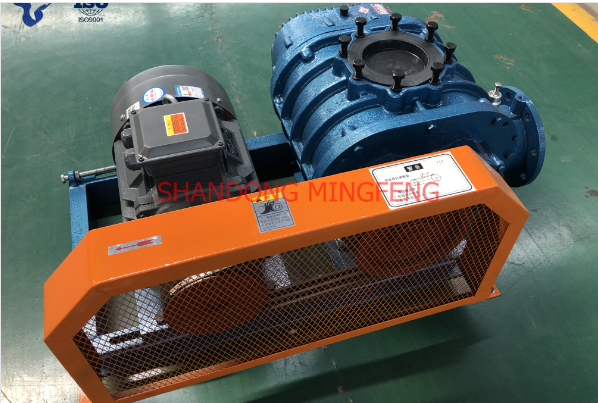 If long-term rust and dust cause the internal gaps of the Roots blower rotor, chamber, etc., to become smaller, the resistance will increase, leading to overload and power-off protection. 1. Startup Precautions If the Roots blower is not started under no load, it will trip or stall; it is essential to remember that the Roots blower must start under no load. 2. Simple Trip A simple trip of the Roots blower will not cause damage to it; at this time, the action to take is to open the vent valve, start the blower, and check its operating condition. 3. Motor Burnout If the motor is burned out and cannot start the three-lobe Roots blower, we will need to replace the motor, which is a significant loss. The Roots blower cannot be pressurized; pressurization can easily lead to motor damage, and a sudden increase in the pressure carried by the blower can lead to very serious situations.
Key words:

Submit information now to obtain the total solution of wind turbine
To provide users with high-quality products and convenient pre-sale, sale and after-sales service, reflecting the "Ming Feng" to make users satisfied with the whole process of service.
No. 1-3, West First Road North, Fenghuangshan Industrial Park, Puji Street, Zhangqiu District, Jinan City, Shandong Province
Free service hotline