

-
Products

-
-
-
After-sale Service
How much do you know about the wear of Roots blower parts?
Release time:
2022-03-08
The wear process of the blower parts varies greatly due to differences in friction, environmental conditions, and surface contact conditions. 1. The initial stage of wear is the early stage of material wear, where the unevenness of the blower parts and the oxidation layer, decarburization layer, are quickly worn down due to the frictional forces acting on the Roots blower parts during operation. The Roots blower operates without friction in the impeller within the body, requiring no lubrication, which ensures that the discharged gas is oil-free. It is an ideal pneumatic conveying gas source for industries such as chemicals and food. At this time, the equipment can demonstrate a high production efficiency. The normal wear stage is the intermediate stage of material wear. Generally, the wear degree of the Roots blower parts increases uniformly and slowly over time. Therefore, productivity and processing quality will improve, making this stage longer. 3. The rapid wear stage is the most vulnerable stage, where the normal wear relationship has been disrupted, leading to a sharp increase in wear, which subsequently causes damage to the stainless steel blower parts and equipment downtime. The Roots blower is a positive displacement blower. During use, as pressure changes, the flow variation is also small. Therefore, the selection range for pressure is wide, and the flow can be adjusted by selecting the rotational speed as needed. The Roots blower operates without friction in the impeller within the body, requiring no lubrication, which ensures that the discharged gas is oil-free. It is an ideal pneumatic conveying gas source for industries such as chemicals and food. However, prior to this, the precision, performance, and productivity of the equipment have significantly decreased. Therefore, it is generally not allowed for Roots blower parts to reach the severe wear stage. Repairs or replacements should be made when the Roots blower parts approach the later stage of normal wear, as this stage is also relatively short.
The wear process of the blower parts varies greatly due to differences in friction, environmental conditions, and surface contact conditions.
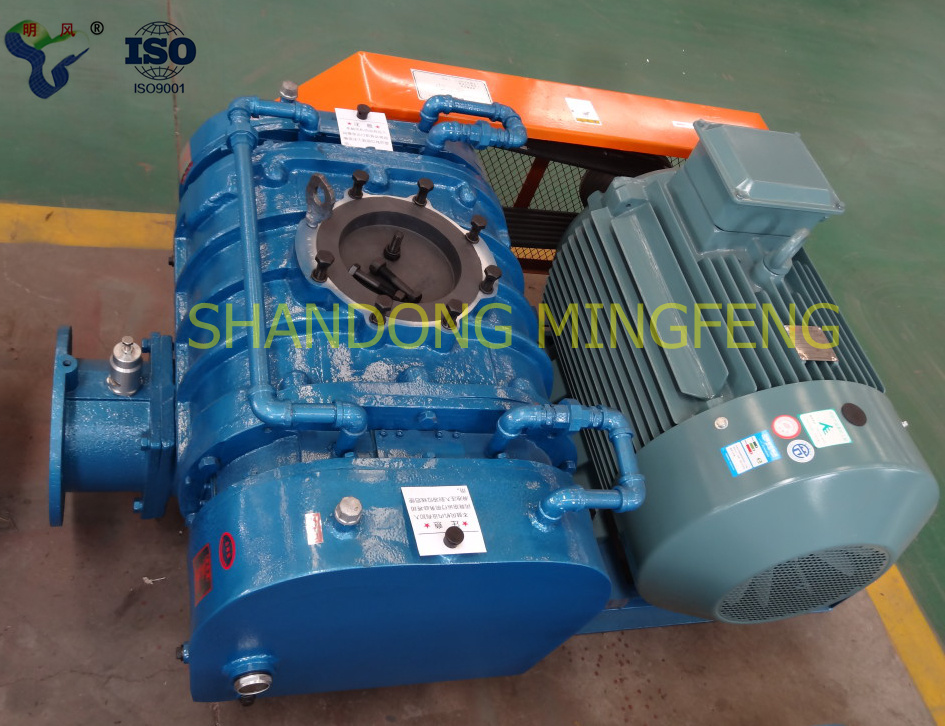
1. The initial wear stage is the early stage of material wear, where the unevenness of the blower parts and the oxidation layer and decarburization layer are quickly worn down due to the friction between the parts of the Roots blower. The Roots blower operates without friction in the impeller within the body, requiring no lubrication, which ensures that the discharged gas is oil-free. It is an ideal pneumatic conveying gas source for industries such as chemicals and food. At this time, the equipment can demonstrate higher production efficiency.
- The normal wear stage is the intermediate stage of material wear. Normally, the wear degree of the Roots blower parts increases uniformly and slowly over time. Therefore, productivity and processing quality will improve, making this stage longer.
3. The rapid wear stage is the most vulnerable stage. At this time, the normal wear relationship has been disrupted, leading to a sharp increase in wear, which subsequently causes damage to the stainless steel blower parts and equipment shutdown. The Roots blower is a volumetric operation type blower. During use, as the pressure changes, the flow variation is also small. Therefore, the pressure selection range is wide, and the flow selection can be achieved by adjusting the speed. The Roots blower operates without friction in the impeller within the body, requiring no lubrication, which ensures that the discharged gas is oil-free. It is an ideal pneumatic conveying gas source for industries such as chemicals and food. However, prior to this, the precision, performance, and productivity of the equipment have significantly decreased. Therefore, it is generally not allowed for Roots blower parts to reach the rapid wear stage. Repairs or replacements should be made when the Roots blower parts approach the late stage of normal wear, as this stage is also relatively short.
Key words:

Submit information now to obtain the total solution of wind turbine
To provide users with high-quality products and convenient pre-sale, sale and after-sales service, reflecting the "Ming Feng" to make users satisfied with the whole process of service.
No. 1-3, West First Road North, Fenghuangshan Industrial Park, Puji Street, Zhangqiu District, Jinan City, Shandong Province
Free service hotline