

-
Products

-
-
-
After-sale Service
How to choose an environmentally friendly Roots blower?
Release time:
2022-03-08
Roots blowers have great adaptability and are widely used, thus classified under the category of general machinery. Their assembly and usage conditions are relatively simple, but the usage methods of Roots blowers vary across different industries. (1) Wastewater Treatment Municipal wastewater projects and domestic sewage, which we commonly refer to as widely distributed wastewater treatment plants, primarily use Roots blowers for aeration and oxygen supply. Their main purpose is to provide oxygen and flow to the biochemical reaction tanks, ensuring the normal survival of microbial species, which helps remove harmful and reactive substances from the wastewater through these microorganisms, creating a good environment for subsequent sedimentation and other treatments. Roots blowers typically supply dozens or even hundreds of tanks through main pipelines, so they generally require a large flow rate and long operating times, imposing strict operational requirements on the Roots blowers themselves. Due to the structural issues of Roots blowers, they tend to produce significant noise. Many water treatment systems are usually indoors or in urban areas, leading to frequent replacements of Roots blowers by such users. However, in suburban areas and water treatment projects with good noise control, the use of Roots blowers remains quite common. This is because Roots blowers, compared to other types of oxygen supply blowers, have the advantages of large flow rates and stable gas supply, making them suitable for such systems. (3) Desulfurization and Denitrification Flue gas treatment, desulfurization, denitrification, and dust removal systems in power plants are commonly used. Desulfurization and denitrification can be simply described as the process of neutralizing acids with bases. Desulfurization involves removing sulfur dioxide from boiler flue gas through a lack of supply, while denitrification involves removing nitrogen oxides from boiler flue gas. The usage characteristics of this type of Roots blower include large scale, large models, and high pressure, so when selecting models, large flow and high pressure, models above 200, bipolar series, and high-pressure water cooling become the best choices for users. (4) Pneumatic Conveying Pneumatic conveying, also known as air flow conveying, utilizes the energy of air flow to transport granular materials along the direction of the air flow in closed pipelines. It is a specific application of fluidization technology. The structure of pneumatic conveying devices is simple, and they are easy to operate, capable of horizontal, vertical, or inclined conveying. During the conveying process, physical operations such as heating, cooling, drying, and air flow classification, or certain chemical operations can also be performed simultaneously.
Roots BlowerIt has a great adaptability and is widely used, thus classified under the category of general machinery. Its assembly and usage conditions are relatively simple, but the usage of the Roots blower varies across different industries.
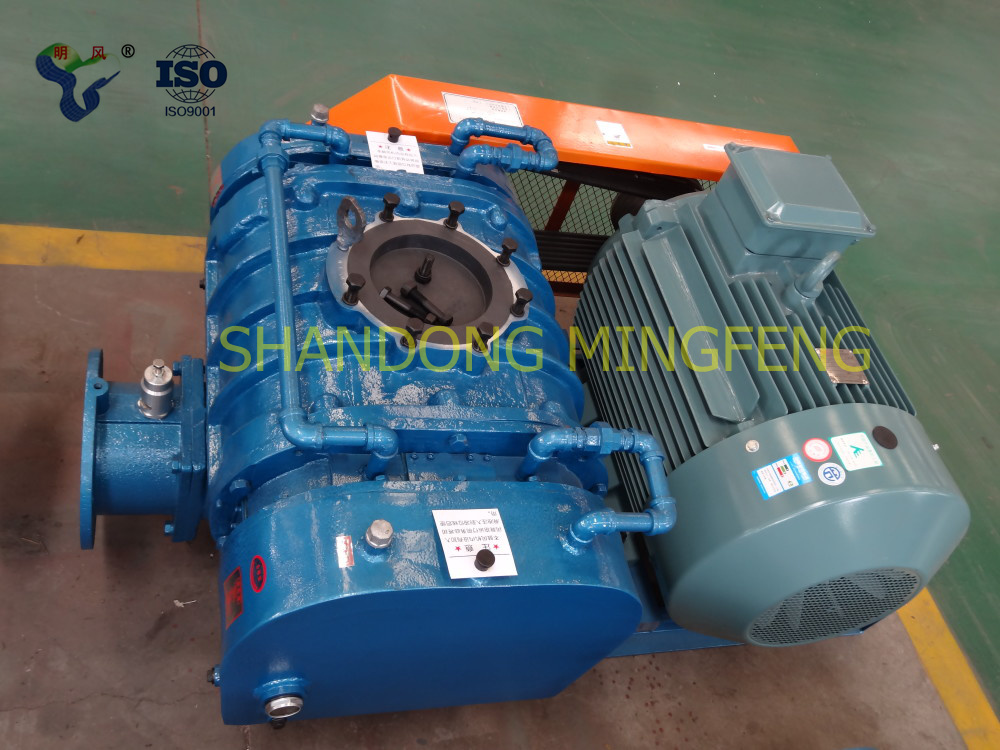
(1) Wastewater Treatment
Municipal wastewater projects and domestic sewage, which are commonly referred to as widely distributed wastewater treatment plants, the main purpose of the Roots blower is to provide aeration and oxygen supply. Its important goal is to supply oxygen and flow to the biochemical pool for the reaction bacteria, ensuring the normal survival of the bacterial strains, removing harmful and reactive substances from the wastewater through the bacterial strains, and providing a good environment for the next steps of sedimentation and other treatments. The Roots blower usually supplies dozens or even hundreds of pools through the main pipeline, so it generally requires a large flow rate and long operating time, which imposes strict operational requirements on the Roots blower itself.
Due to the structural issues of the Roots blower itself, it tends to produce a relatively high noise level. Many water treatment systems are usually indoors or in urban areas, and the Roots blower is often replaced by such users. However, in suburban areas and water treatment projects with good noise control, the use of Roots blowers is still quite common, because compared to other types of oxygen supply blowers, the Roots blower has the advantages of large flow and stable gas supply, making it suitable for such systems.
(3) Desulfurization and Denitrification
Flue gas treatment, desulfurization and denitrification, and dust removal systems in power plants are used more frequently. Desulfurization and denitrification can be simply described as the process of neutralizing acids with alkalis. Desulfurization involves removing sulfur dioxide from boiler flue gas through a lack of supply, while denitrification involves removing nitrogen oxides from boiler flue gas. The Roots blowers used in this context are characterized by large scale, large models, and high pressure, so when selecting models, large flow and high pressure, models above 200, bipolar series, and high-pressure water cooling become the best choices for users.
(4) Pneumatic Conveying
Pneumatic conveying, also known as air flow conveying, utilizes the energy of air flow to transport granular materials along the direction of the air flow in a closed pipeline. It isFluidization Technologya specific application of it. The structure of pneumatic conveying devices is simple, and they are easy to operate, capable of horizontal, vertical, or inclined conveying. During the conveying process, physical operations such as heating, cooling, drying, and air flow classification, or certain chemical operations can also be performed simultaneously.
Key words:

Submit information now to obtain the total solution of wind turbine
To provide users with high-quality products and convenient pre-sale, sale and after-sales service, reflecting the "Ming Feng" to make users satisfied with the whole process of service.
No. 1-3, West First Road North, Fenghuangshan Industrial Park, Puji Street, Zhangqiu District, Jinan City, Shandong Province
Free service hotline