

-
Products

-
-
-
After-sale Service
The fan manufacturer will help you understand the difference between high-efficiency motors and ordinary motors.
Release time:
2022-05-21
Roots blowers, as major consumers of electricity, have their performance and energy consumption directly affected by the quality of the motor. While most people may know the difference between variable frequency motors and ordinary motors, they generally do not understand the differences between ordinary motors and high-efficiency motors. Later, Mingfeng Machinery will help you understand the detailed situation. In China, motor energy consumption accounts for more than 50% of total energy consumption. Since its establishment, China has developed five generations of low-voltage motor products, from the earliest J, J02 series to the later YX3, YE3 series, with efficiency levels continuously improving. However, the penetration rate of high-efficiency motors has always been low, leading to significant waste. Therefore, starting in 2009, the country began to gradually phase out high-energy-consuming motor products, completing the elimination of the Y3 series and various low-efficiency motors named by enterprises before 2003 (inclusive) by 2015, and stopping production. So what is a high-efficiency motor, and how does it differ from an ordinary motor? In China, motor energy efficiency is divided into three levels. A high-efficiency motor refers to a motor whose energy efficiency meets the national mandatory standard GB18613-2006 "Energy Efficiency Limit Values and Energy Efficiency Grades for Small and Medium-sized Three-phase Asynchronous Motors" at the second-level energy efficiency index. The difference between high-efficiency motors and ordinary motors lies first in the differences in efficiency and energy consumption. High-efficiency motors reduce losses by adopting reasonable stator and rotor slot numbers, fan parameters, and sine winding measures, achieving higher efficiency than ordinary motors. High-efficiency motors are on average 3% more efficient than ordinary motors, while super high-efficiency motors are nearly 5% more efficient. In terms of energy consumption, high-efficiency motors consume about 20% less energy on average than ordinary motors, while super high-efficiency motors consume more than 30% less. Secondly, there is a cost difference. High-efficiency motors, by using high-quality materials and optimized designs, have a higher cost than ordinary motors. High-efficiency motors cost 25%-30% more than ordinary motors, while super high-efficiency motors can be 40%-60% more expensive. However, in general, the investment in high-efficiency motors can be recovered within two years, and they can save electricity for enterprises throughout their entire lifecycle. Moreover, combined with the national subsidy policy for high-efficiency energy-saving motors (Notice on the Implementation Rules for the Promotion of High-Efficiency Motors under the Energy-Saving Products Benefit Project), the cost difference is minimal. In addition, high-efficiency motors operate at lower temperatures, have longer lifespans, and lower maintenance costs; and due to their smaller slip rates, their speeds can also be higher than those of ordinary motors.
Roots blowers, as major consumers of electricity, have their performance and energy consumption directly affected by the quality of the motor. While most people may know the difference between variable frequency motors and ordinary motors, they generally do not understand the differences between ordinary motors and high-efficiency motors. Later, Mingfeng Machinery will take you to understand the detailed situation. In China, the energy consumption of motors accounts for more than 50% of the total energy consumption. Although our country has developed five generations of low-voltage motor products since its establishment, from the earliest J, J02 series to the later YX3, YE3 series, the efficiency level has continuously improved, but the penetration rate of high-efficiency motors has always been low, resulting in significant waste. Therefore, starting in 2009, the country began to gradually phase out high-energy-consuming motor products, completing the elimination of the Y3 series and various low-efficiency motors named by enterprises before 2003 (inclusive) by 2015 and stopping production. So what is a high-efficiency motor, and how does it differ from an ordinary motor? Our country classifies motor energy efficiency into three levels. A high-efficiency motor refers to a motor whose energy efficiency meets the national mandatory standard GB18613-2006 "Energy Efficiency Limit Values and Energy Efficiency Grades for Small and Medium-sized Three-phase Asynchronous Motors" level 2 energy efficiency indicators. The difference between high-efficiency motors and ordinary motors lies first in the differences in efficiency and energy consumption. High-efficiency motors reduce losses by adopting reasonable stator and rotor slot numbers, fan parameters, and sine winding measures, with efficiency superior to that of ordinary motors. High-efficiency motors are on average 3% more efficient than ordinary motors, while super high-efficiency motors are nearly 5% more efficient. In terms of energy consumption, high-efficiency motors consume about 20% less energy on average than ordinary motors, while super high-efficiency motors consume more than 30% less than ordinary motors.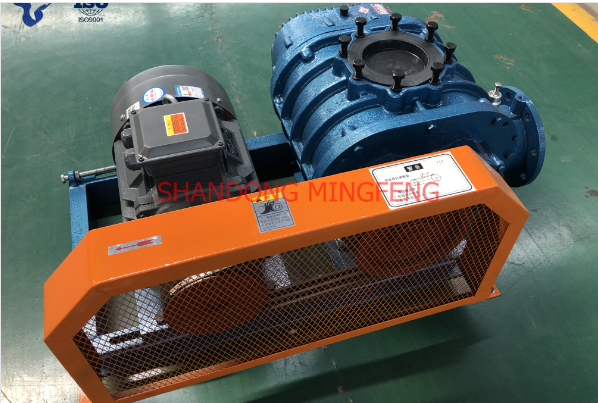 Secondly, there is a cost difference. High-efficiency motors, by using high-quality materials and optimized designs, have a higher cost than ordinary motors. High-efficiency motors cost 25%-30% more than ordinary motors, while super high-efficiency motors can be 40%-60% more expensive. However, generally speaking, the investment in high-efficiency motors can be recovered within 2 years, and throughout their entire lifecycle, they can save electricity for enterprises. Moreover, combined with the national subsidy policy for high-efficiency energy-saving motors (Notice on the Implementation Details for Promoting High-Efficiency Motors under the Energy-Saving Product Benefit Project), the cost difference is minimal. In addition, high-efficiency motors operate at lower temperatures, have longer lifespans, and lower maintenance costs; and due to their smaller slip rates, their speeds can also be higher than those of ordinary motors.
Key words:

Submit information now to obtain the total solution of wind turbine
To provide users with high-quality products and convenient pre-sale, sale and after-sales service, reflecting the "Ming Feng" to make users satisfied with the whole process of service.
No. 1-3, West First Road North, Fenghuangshan Industrial Park, Puji Street, Zhangqiu District, Jinan City, Shandong Province
Free service hotline