

-
Products

-
-
-
After-sale Service
What aspects can the Nantong Roots blower be adjusted?
Release time:
2020-11-17
When the Roots blower is running, there are some situations that we need to pay attention to, so the editor hopes that everyone can learn more about the equipment. Today, I want to share with you the issue of adjusting the operation of the blower.
There are some situations that we need to pay attention to when the Roots blower is running, so the editor hopes everyone can learn more about the equipment. Today, I want to share with you the issue of blower operation adjustment.
According to fluid mechanics theory, the flow process of gas is accompanied by losses. For example, after the airflow passes through the throttling device, the airflow pressure will correspondingly decrease, which means they have lost the function of the blower. Since these occur during the process of the blower delivering gas, the energy of the blower is wasted.
The working state point of the blower is the intersection of the performance curve of the blower at a certain speed and the resistance characteristic curve of the pipeline network. In actual operation, the blower does not always stay at the design condition point. Depending on user needs or changes in the external environment, the blower operates under different working conditions, which can also change. To ensure that the wind pressure or airflow of the blower reaches a certain target value, manual control of the blower or pipeline network is required, also known as adjustment. Under the premise of ensuring stable operation of the blower, effective adjustment can meet production requirements for flow or pressure while maximizing energy savings. In simple terms, the purpose of adjustment is to meet performance requirements, stabilize working conditions, save energy, and prevent surge.
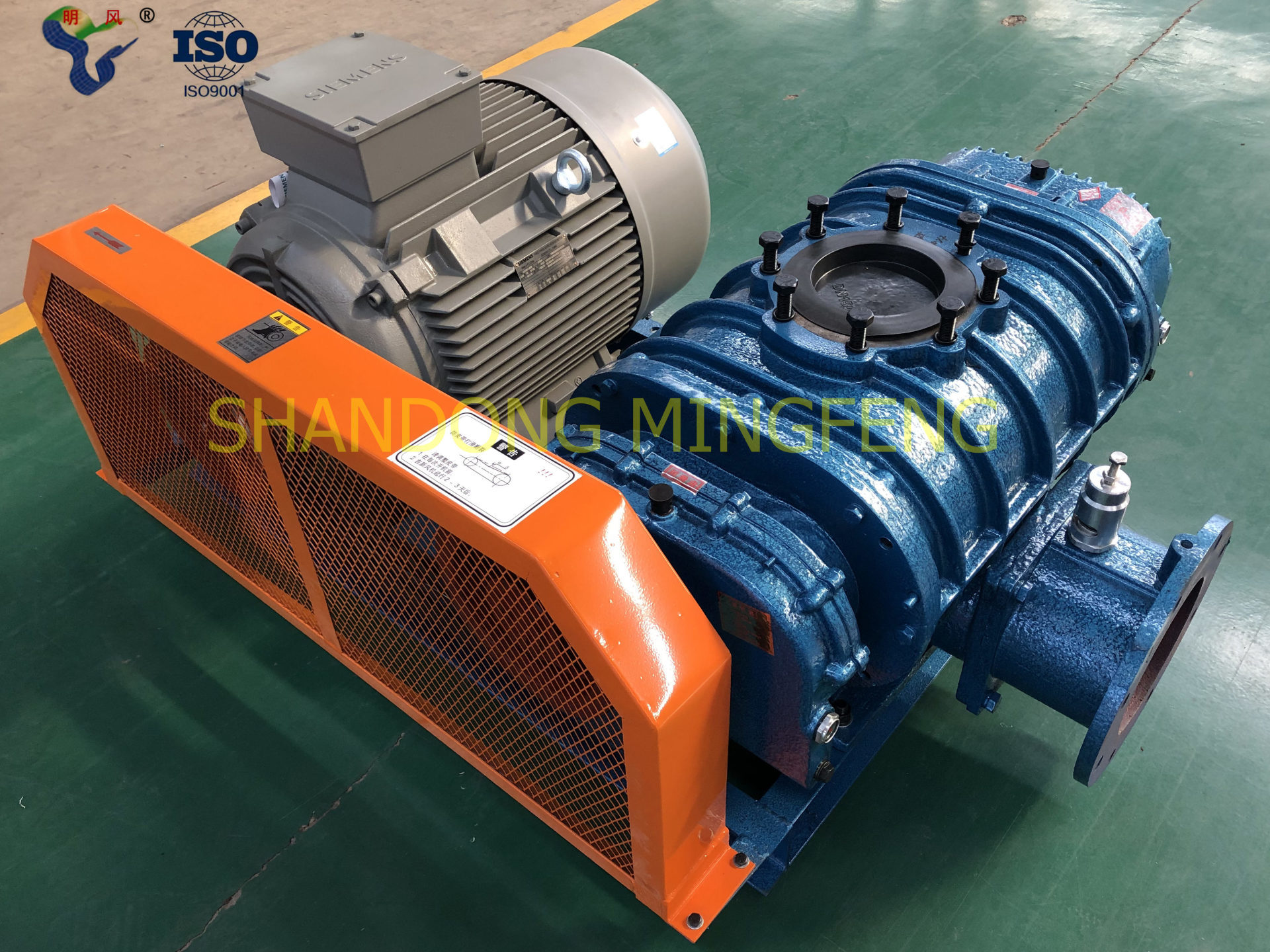
The blower can achieve the same purpose through different adjustment methods, but their energy-saving effects are not the same.
Through theoretical analysis and practical verification, conclusions can be drawn from four aspects.
(1) For the blower, the power consumption of the outlet throttling adjustment method is large; under the condition of relatively reduced flow, the power also correspondingly decreases. If Q=0.65Q0, the corresponding power decreases to about 80% of the original, but compared to other adjustment methods, the energy consumption is still high.
When the relative flow changes little, the power consumption differences among several adjustment methods are very small. That is to say, the impact of the adjustment method on energy-saving effects is minimal, and it may not even be energy-saving, but rather due to the existence of multiple power-consuming adjustment devices.
Generally speaking, the greater the adjustment depth, the more obvious the energy-saving effect. Therefore, it is important to choose the adjustment method carefully.
(3) The speed adjustment curve approaches the ideal curve. Therefore, the variable frequency speed adjustment method is superior, especially when using variable frequency motor speed adjustment, the energy-saving scheme is optimal, but a variable frequency device needs to be added. It is recommended to actively try variable frequency speed adjustment for medium and small capacity; due to the high cost of large capacity high-pressure variable frequency speed adjustment equipment, it is recommended to conduct a comprehensive comparison based on specific situations.
From the above content, it can be understood that attention should be paid to the equipment from multiple aspects, and it is not about letting the equipment run by itself without care.
Key words:

Submit information now to obtain the total solution of wind turbine
To provide users with high-quality products and convenient pre-sale, sale and after-sales service, reflecting the "Ming Feng" to make users satisfied with the whole process of service.
No. 1-3, West First Road North, Fenghuangshan Industrial Park, Puji Street, Zhangqiu District, Jinan City, Shandong Province
Free service hotline